
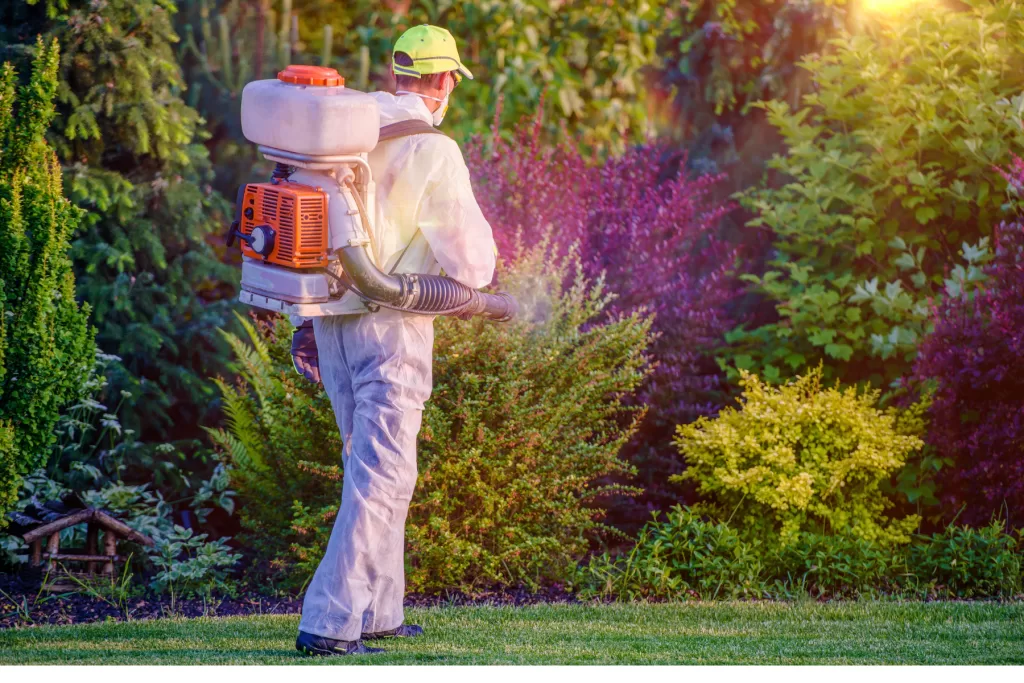
Pest control and lawn care are two of the most financially accessible — and most reliably profitable — home service franchise categories available to buyers today. Both share a trait that experienced franchise investors prioritize above almost everything else: genuine recurring revenue from clients who need the service again and again, on a predictable schedule, whether or not they’re thinking about it.
This guide covers both categories in depth: how the business models work, what investment ranges look like, which brands are worth evaluating, and what makes a strong market for each.
Pest Control Franchises
Why Pest Control Works as a Franchise Investment
Pest control occupies a uniquely favorable position in the home services landscape. Demand is non-discretionary — homeowners who have a cockroach or termite problem do not defer treatment. Climate change is expanding pest pressure into regions that previously had mild pest issues. The recurring contract model — quarterly or monthly treatments — creates predictable revenue that compounds as the client base grows.
A pest control franchise owner who adds 20 recurring accounts per month, retains 90%+ of existing accounts, and operates in a market with year-round pest pressure can build a business that reaches $1M+ in annual revenue within 3–4 years.
Investment Range for Pest Control Franchises
Pest control is one of the most accessible entry points in home services:
- Low end: $70,000–$120,000 total investment for smaller, single-territory brands. These typically include franchise fee, vehicle, equipment, initial marketing, and working capital.
- Mid-tier: $120,000–$250,000 for more established national brands with stronger marketing infrastructure and brand recognition.
- Multi-territory / premium brands: $250,000–$500,000+ for buyers who want to enter with multiple protected territories from day one, which many experienced franchise advisors recommend for pest control due to the route density advantages of scale.
- Liquid capital requirements: Most pest control franchisors require $50,000–$100,000 in accessible liquid assets.
Revenue Model: How Pest Control Franchises Make Money
Recurring service contracts. The foundation. Quarterly treatments ($120–$200/visit), monthly plans ($60–$100/month), or annual plans with seasonal visits. Each client on contract is predictable, schedulable, and efficient to service on an established route.
Termite treatment and protection. Termite work is high-ticket — termite treatments can run $500–$3,000+ per home depending on the treatment method and severity. Annual termite inspection and protection plans are a separate recurring revenue stream on top of general pest control.
Mosquito control. Seasonal (or year-round in warm climates) mosquito treatment programs have become a significant add-on revenue category. At $75–$150 per treatment with monthly frequency in summer, a strong mosquito program can add meaningfully to annual revenue.
Bed bug treatment. High-urgency, high-ticket work ($500–$2,000+ per job). Not recurring but high-margin and reliably in demand.
Commercial accounts. Restaurants, hotels, property managers, and commercial facilities require regular pest control — often under contractual service agreements. Commercial accounts tend to have higher value and lower churn than residential.
Top Pest Control Franchise Brands
Mosquito Joe
Part of the Neighborly system. Focuses specifically on outdoor pest treatment (mosquitoes, fleas, ticks). More accessible entry investment than full-service pest control brands. Strong in suburban markets with outdoor living culture.
Truly Nolen
Strong in the Southeast and Southwest. Full-service pest control with a distinctive brand and a loyal client base in hot-climate markets.
Mosquito Shield
A recurring outdoor pest control franchise focused on mosquito, tick, and flea barrier programs. Founded in 2001, Mosquito Shield has built one of the stronger retention profiles in the category — 84% annual customer retention — through a proprietary blended formula applied on a recurring seasonal schedule. A solid fit for buyers who want a focused, operationally simple business without the complexity of full-service pest operations.
Clear Pest Pros
Launched in 2025, Clear Pest Pros is built specifically for entrepreneurs entering pest control without prior industry experience. Full-service residential and commercial pest control — ants, roaches, rodents, stinging insects, and flying pests — with a lean startup model: owner plus one technician to open.
Local and regional brands
Many strong regional pest control franchises exist that are worth evaluating alongside national brands. In some markets, a well-supported regional brand with local recognition can outperform a national name with heavy royalty fees.
Lawn Care Franchises
Why Lawn Care Works as a Franchise Investment
Like pest control, lawn care is built on recurring service. Homeowners who want a professionally maintained lawn don’t do one treatment and stop — they’re on a regular schedule that spans the growing season or, in warm climates, the full year. That recurring visit cadence creates route density, operational efficiency, and compounding customer lifetime value.
Lawn care also benefits from low barriers to customer acquisition. The results are visible to neighbors, leading to organic referral business. In established suburban markets, a well-branded lawn care truck driving a tight service route is its own marketing.
Investment Range for Lawn Care Franchises
- Entry-level: $60,000–$130,000 for single-territory lawn care franchises, including equipment, vehicle, initial marketing, and working capital.
- Mid-tier full-service: $130,000–$300,000 for brands offering fertilization, weed control, aeration, pest control, and lawn renovation services.
- Premium / multi-service landscape brands: $300,000–$600,000+ for brands that combine lawn treatment with landscape maintenance, irrigation, and outdoor enhancement services.
- Liquid capital requirements: $40,000–$100,000 for most brands.
Revenue Model: How Lawn Care Franchises Make Money
Annual service programs. The core. Customers sign up for a seasonal program — typically 5–8 visits per year in northern climates, year-round in the South — covering fertilization, weed control, and grub/insect treatment. Pricing ranges from $400–$900/year per customer depending on lawn size and services included.
Aeration and seeding. Fall aeration and overseeding programs are high-value add-on services with strong attachment rates to existing customers. Typically $150–$400 per treatment.
Tree and shrub care. Some lawn care franchises offer ornamental plant health programs — fertilization, pest control, and disease treatment for trees and shrubs. Strong upsell for full-service programs.
Irrigation. Sprinkler system installation, startup, winterization, and repair add meaningful revenue per customer in markets where irrigation is common.
Snow removal. In northern markets, many lawn care franchises convert their customer base and equipment to snow removal in winter — creating year-round revenue from the same client relationships.
Top Lawn Care Franchise Brands
Lawn Doctor
One of the most established lawn care franchise systems. Strong brand in the Northeast and Mid-Atlantic. Franchise fee and investment accessible relative to brand strength.
NaturaLawn of America
rganic and natural lawn care positioning. Growing category as homeowners prioritize pet-safe and environmentally friendly treatments. Premium positioning supports higher pricing.
The Grounds Guys
Part of the Neighborly system (19 brands, 5,000+ locations), The Grounds Guys offers full-service residential and commercial grounds maintenance: lawn care, landscape design, irrigation, snow removal, and seasonal property upkeep. The brand operates across 250+ locations in North America.
Heroes Lawn Care
A lawn care franchise built around the stackable services model: fertilization, weed control, irrigation, and pet waste removal sold to the same customer, increasing average revenue per account over time. Currently operating 25 franchise locations with strong training infrastructure.
Lawn Squad
Part of the Authority Brands family (which also includes Mosquito Squad, DoodyCalls, and others), Lawn Squad focuses on recurring treatment programs — fertilization, weed control, and overseeding — without the operational complexity of mowing or full landscaping.
Waterloo Turf
An artificial turf installation and maintenance franchise that has grown to 78 units in under two years since launching its franchise program in late 2024 — one of the faster early-stage growth trajectories in home services. Well-positioned for Sunbelt markets where water conservation legislation and drought conditions are accelerating adoption of synthetic turf for homes, commercial properties, dog parks, and schools.
Pest Control vs. Lawn Care: Which Is Right for You?
Both categories are strong. Here’s how they differ in ways that matter for buyer decision-making:
- Seasonality: Pest control in warm climates is year-round. Lawn care in northern markets is seasonal — 7–9 months of active service — which requires cash flow management through winter or supplemental revenue (snow removal). In the South, both are year-round.
- Technician licensing: Most states require pest control technicians to be licensed (pesticide applicator license). Lawn care also often requires licensing for pesticide applications. Both are manageable through training and state certification programs; the franchise system will guide you.
- Route density: Both businesses benefit from geographic concentration. Tight routes — many customers on a defined driving path — reduce labor cost per job and increase efficiency. Pest control routes are typically more flexible than lawn care in terms of scheduling; lawn care customers often have specific seasonal windows.
- Average ticket: Pest control per-visit tickets tend to be higher ($100–$200+ for quarterly service) vs. lawn care per-visit ($60–$120 for a standard fertilization treatment). However, lawn care visit frequency is typically higher (5–8 visits/year vs. 4 for quarterly pest control), so annual revenue per customer can be similar.
- Semi-involved viability: Both are strong candidates. Pest control tends to be slightly easier to manage semi-involved due to its more systematized, technician-driven delivery model.
- Geographic fit: Pest control is strongest in the South, Southeast, and any market with year-round pest pressure. Texas and Florida are among the best pest control states in the country. Lawn care is strong across the Midwest, Northeast, and Pacific Northwest — markets with strong lawn culture and identifiable growing seasons.
What Makes a Strong Market for These Categories
For pest control: Year-round climate, high homeownership rate, suburban density, older housing stock (more pest vulnerability), limited strong local operators already in market. Florida, Texas, Georgia, and the Carolinas are particularly favorable.
For lawn care: Strong lawn culture (Midwest, Northeast), suburban homeownership density, household income sufficient to support annual service programs ($75,000+), and manageable competitive landscape. Avoid markets already saturated by strong regional operators without a clear differentiation angle.
Use the BizExplorer map to evaluate specific territories — demographic data, homeownership rates, and competitive presence are all factors you can assess before committing.
How BizExplorer Helps Pest Control and Lawn Care Buyers
The BizExplorer map shows you open franchise territories in both categories, layered with the demographic data that determines how strong each market actually is. You can compare markets side by side, identify high-income suburban corridors with favorable homeownership profiles, and connect with a franchise advisor who knows which brands have strong franchisees in territories like yours.
Frequently Asked Questions
How much does a pest control franchise cost?
Total investment typically ranges from $70,000–$500,000+ depending on brand and territory count. Most single-territory mid-tier pest control franchises fall in the $100,000–$250,000 range. Liquid capital of $50,000–$100,000 is typically required.
How much does a lawn care franchise cost?
Total investment ranges from $60,000 for entry-level single-territory brands to $600,000+ for premium multi-service brands. Most buyers start in the $100,000–$300,000 range. Liquid capital of $40,000–$100,000 is typically required.
Is pest control a good semi-absentee franchise?
Yes — pest control is one of the most recommended semi-involved home service categories. Systematized routes, licensed technicians who operate largely independently, and recurring contracts make it manageable under GM oversight.
Can lawn care franchises operate year-round?
In warm-climate states like Florida, Texas, and the Southeast, yes. In northern states, the active service season is typically March–November, with many franchises adding snow removal or other winter services to maintain year-round revenue. Factor seasonality explicitly into your cash flow projections.
What licenses do I need for a pest control franchise?
Most states require pest control technicians to hold a pesticide applicator license issued by the state agriculture or environmental department. Requirements and exam processes vary by state. Your franchise system will guide you through the licensing process as part of onboarding. Build licensing timelines into your pre-opening plan.
Which states are best for pest control franchises?
Florida, Texas, Georgia, and the Carolinas are among the strongest pest control markets due to year-round climate, high pest pressure, and strong suburban homeownership.
Are there organic or natural lawn care franchise options?
Yes. NaturaLawn of America is the most established organic-focused lawn care franchise brand. Demand for pet-safe, child-safe, and environmentally responsible lawn treatment is growing, and this positioning supports premium pricing in high-income suburban markets.