
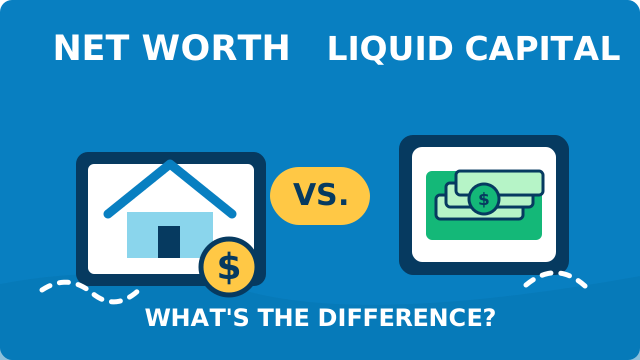
Let’s be honest… the first time you see a franchise listing ask for “minimum net worth” and “liquid capital,” your stomach might drop a little.
Two numbers. Both sound official. Both seem to decide whether you’re “allowed” to chase this dream.
So let’s slow down. No urgency here. Consider this a little Franchise 101. You shouldn’t need a business degree to understand what you’re looking at.
Once you understand these words, they stop feeling like gatekeepers and start feeling like tools.
What is net worth?
Net worth is the big-picture snapshot of your finances. It’s everything you own minus everything you owe.
What usually counts as something you own (an asset): – Cash in checking and savings accounts – Investment accounts (stocks, bonds, mutual funds) – Retirement accounts – Home equity (what your home is worth minus what’s left on the mortgage) – Other real estate, vehicles, or valuable property
What counts as something you owe (a liability): – Mortgage balances – Car loans – Student loans – Credit card debt – Any other outstanding loans
Net worth tells a franchisor something about your overall financial stability. It shows whether you have a foundation that can carry you through the ups and downs of a new business.
What is liquid capital?
Liquid capital is narrower. It’s the money you can access quickly, without much penalty or delay.
It usually includes: – Cash in checking and savings – Money market accounts – Stocks and bonds you could sell fairly quickly
It usually does not include: – Home equity (you can’t spend your kitchen) – Cars or personal property – Retirement funds that carry penalties or restrictions for early withdrawal. Rules vary, so talk with a financial professional about your specific accounts.
If net worth is the whole tree, liquid capital is the fruit you can actually pick today.
Why do franchisors ask for both?
This part can feel personal. It isn’t. Here’s what each number is really telling them.
Net worth shows resilience. Opening a business means real costs and a ramp-up period. A healthy net worth suggests you won’t be crushed if things take longer than expected.
Liquid capital shows readiness. You’ll likely need cash for things like the initial franchise fee, equipment, setup, and working capital while the business grows. Lenders also typically want to see that you can put some of your own money down. Liquid capital shows you can actually cover those things now, not someday.
Together, they help a franchisor (and you!) answer one question: Can this person start strong and stay steady?
That’s not judgment. It’s protection, for them and honestly for you too.
A simple example
(This is a hypothetical example for illustration only. The numbers aren’t drawn from any real franchise’s requirements.)
Meet Jordan. Jordan has: – $40,000 in savings – $30,000 in a brokerage account – $150,000 in home equity – A $20,000 car (with a $10,000 loan) – $15,000 in student loans
Jordan’s net worth: Assets: $40,000 + $30,000 + $150,000 + $20,000 = $240,000 Liabilities: $10,000 + $15,000 = $25,000 Net worth: $215,000
Jordan’s liquid capital: Savings + brokerage = $70,000
Now say a hypothetical franchise asks for $200,000 in net worth and $75,000 in liquid capital. Jordan clears the net worth bar but comes up a little short on liquid capital.
Does that mean the dream is over? Not necessarily. It might mean: – Looking at opportunities with a different investment range – Exploring financing options (our financing guide walks through the basics) – Considering a resale franchise – Simply giving it a little more time to build up savings
Knowing your numbers doesn’t close doors. It shows you which ones are already open. If you want help seeing which ones, Find Your Fit matches your real picture to opportunities that make sense for you.
OUT / IN
OUT: Feeling ashamed or anxious about the numbers on a listing. IN: Knowing exactly where you stand, so you can choose from a place of clarity.
OUT: Rushing into the first opportunity that “feels right.” IN: Matching your real financial picture to businesses that actually fit.
How to figure out your own numbers
You don’t need to have it all figured out. You just need somewhere to start.
- List everything you own and roughly what it’s worth.
- List everything you owe.
- Subtract. That’s your net worth.
- Circle what you could access in the near term without big penalties. That’s roughly your liquid capital.
- Bring it to a pro. An accountant or financial advisor can help you see what counts for your specific situation. And if you want to talk through franchise questions with a real human, you can book a consult call with our team.
That’s it. No spreadsheet perfection required. A rough picture is a powerful first step, and it helps you ask better questions when you start comparing opportunities.
Because the right fit depends on more than one number. It depends on your goals, your budget, and where you want to build.
The takeaway
Net worth is your foundation. Liquid capital is your launchpad. Franchisors look at both because building a business takes stability and the ability to act.
And here’s the gentle reminder: these numbers describe where you are right now. They don’t define who you are or what you’re capable of building.
Ready to explore?
So… what’s actually possible for you?
- Pick a location.
- See what’s available.
- Narrow it down by what fits your investment range.
Start with the map and see what’s possible on BizExplorer. Create your free account and start exploring at your own pace. Not sure where to begin? Grab a quick consult call. No pressure, just clarity.
Take what resonates. Leave what doesn’t. And let your next step feel like a choice, not a rush.
Business Ownership, Mapped.